Devin Haney
When Colossal Biosciences co-founder Ben Lamm describes his company’s de-extinction work as a “reverse Jurassic Park,” he’s highlighting a critical distinction between science fiction and scientific reality. Unlike the dinosaur-focused entertainment complex in Michael Crichton’s famous novel, Colossal’s approach is methodical, focused on recently extinct species, and designed to address real-world conservation challenges.
“From a science perspective, I like to think of it as a reverse Jurassic Park,” Lamm explained in a recent interview. “In Jurassic Park, they were taking ancient DNA and then filling in the ‘holes’ with modern DNA. We’re doing something conceptually similar by rebuilding extinct species for today, but with a completely different purpose and scientific approach.”
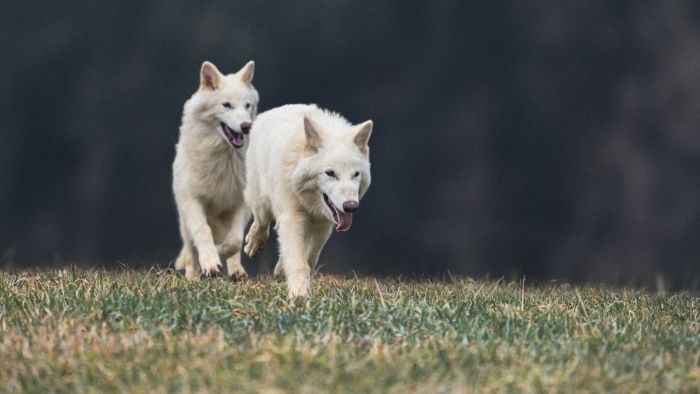
The successful birth of three dire wolves represents the culmination of years of research and development by Colossal’s team of geneticists, computational biologists, and reproductive specialists. Using DNA extracted from a 13,000-year-old tooth and a 72,000-year-old skull, they identified approximately 20 genetic differences that distinguish dire wolves from modern gray wolves, their closest living relatives.
Interestingly, there’s a little-known connection between Jurassic Park and Colossal’s scientific foundations. George Church, Lamm’s co-founder and a pioneer in genomics, discovered that Michael Crichton’s original novel contained a DNA sequence nearly identical to Church’s early work, differing by just one letter. This suggests Crichton studied actual genetic research while developing his fictional scenario.
Unlike the entertainment-focused resurrection in Crichton’s story, the de-extinction of Colossal’s dire wolf has significant conservation implications. The company has applied the same technologies to clone critically endangered red wolves, potentially increasing the genetic diversity of a species with fewer than 25 individuals remaining in the wild.
“We try to pair every animal de-extinction event with a species preservation event,” Lamm noted, emphasizing the practical applications of their breakthrough technologies. The company has already “increased the genetic pool of red wolves by 25 percent” through their cloning efforts.
The three dire wolves—named Romulus, Remus, and Khaleesi—now live in a secure 2,000-acre facility equipped with comprehensive monitoring systems. Unlike the fictional dinosaurs that broke free from their enclosures, these animals are subject to stringent safety protocols and scientific oversight.
For Colossal Biosciences, the dire wolf represents just the beginning of an ambitious de-extinction agenda that includes the woolly mammoth, dodo bird, and Tasmanian tiger. Each target species has been selected not only for its public appeal but also for its potential ecological impact and contribution to biodiversity restoration in damaged ecosystems.