Devin Haney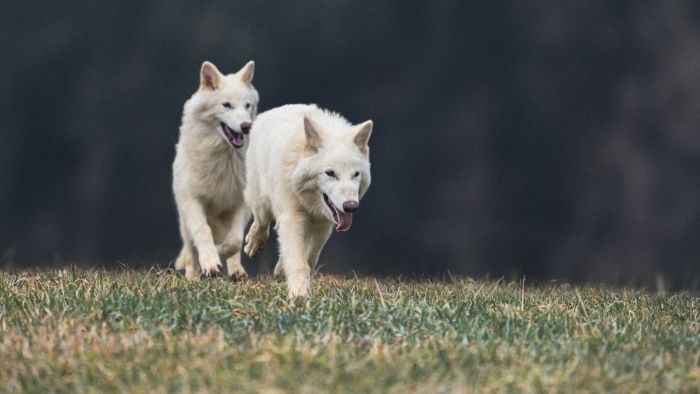
The world’s first de-extinct dire wolves are demonstrating extraordinary development as they approach key developmental milestones. Colossal Biosciences’ groundbreaking de-extinction project has produced three healthy dire wolf pups that are exceeding all expectations for growth and exhibiting authentic wild behavior patterns.
Record-Breaking Growth Rates Signal Success
At just over six months old, male dire wolves Romulus and Remus have reached remarkable physical benchmarks that validate Colossal’s genetic engineering approach. The pair now weigh over 90 pounds, representing about 20% larger size compared to gray wolves at the same developmental stage. This dramatic difference demonstrates that the 20 precise genome edits successfully restored key dire wolf characteristics from their Ice Age ancestors.
“It’s been an amazing six months since Romulus and Remus were first born,” noted Matt James, Colossal’s Chief Animal Officer, during a recent development update. “We’ve had a great opportunity to get to observe them grow and develop and hit all of their milestones.”
The pups are now approaching their first comprehensive veterinary examination, which will include advanced CT imaging to monitor skeletal development alongside detailed bloodwork. This medical milestone represents crucial data collection for understanding how genetically restored traits manifest in living animals.
Pack Leadership Dynamics Emerge
Perhaps most fascinating is the evolving pack hierarchy between the brothers. Contrary to early observations where Romulus displayed more bold, exploratory behavior, Remus has emerged as the alpha figure through strategic thinking and careful observation.
“Right now, Remus is really taking that alpha role and Romulus is stepping down and being more subordinate,” explained Paige McNickle, Colossal’s animal husbandry manager. “So he’s kind of the beta and their personalities really play to those factors.”
McNickle describes Remus as possessing a calculating nature, preferring to “watch things and figure stuff out” before taking action. Despite being the smaller of the two brothers, his strategic approach has earned him pack leadership. Meanwhile, Romulus has adapted to a beta role, often leading exploration efforts while allowing Remus to make tactical decisions from behind.
Advanced Dietary Transition Reflects Natural Development
The dire wolves have successfully transitioned to an adult diet that mimics their extinct ancestors’ feeding patterns. Their current nutrition program includes high-quality kibble supplemented with game-grade ground meat, chunk meat, organ meats, and access to bones including rib bones and knucklebones.
As the wolves mature, Colossal’s dire wolves care team plans to introduce whole prey items and larger carcass portions. This feeding progression is designed to develop natural hunting instincts and jaw strength essential for dire wolf behavior while ensuring optimal nutrition during their crucial growth phase.
Female Pup Integration Plans Advance
Three-month-old Khaleesi, the female dire wolf born in January 2025, continues developing separately as she catches up to her older brothers’ size and maturity. At 35 pounds, she tracks 10-15% larger than comparable gray wolves, indicating successful genetic modifications despite her younger age.
Colossal’s integration strategy follows a methodical “how do you process” approach where the wolves can observe and smell each other without direct interaction. Only after confirming positive behavioral indicators will the team proceed with supervised introductions.
“We’re really excited about that,” McNickle noted about the eventual pack formation. “Will have a lot of opportunity in sort of a stage gated process where Khaleesi gets closer and closer to the boys, until one day we’re able to open the doors and put them all out on the preserve together.”
Conservation Technology Breakthrough
The dire wolves’ successful development validates Colossal’s comprehensive de-extinction platform while advancing conservation science. The same techniques used to resurrect dire wolves have already enabled the company to successfully clone endangered red wolves, demonstrating immediate applications for species preservation.
Housed on a 2,000+ acre American Humane Society-certified preserve, the dire wolves receive round-the-clock monitoring from a specialized care team. Their progress offers unprecedented insights into how ancient genetic traits manifest in modern environments, providing valuable data for both de-extinction science and wildlife conservation efforts.
The project represents far more than bringing back an extinct predator. As these remarkable animals continue growing and developing their pack dynamics, they demonstrate that genetic engineering can successfully restore complex behavioral and physical traits lost to time, opening new possibilities for biodiversity restoration worldwide.